The Smart Way to Kill Noise: How the NS-2 Really Works
Every guitarist knows this moment. You’ve invested in a great guitar and your amp and stepped on your favorite drive pedal, and then it hits you: Bzzzzzzzz. Instead of tone, you get noise.
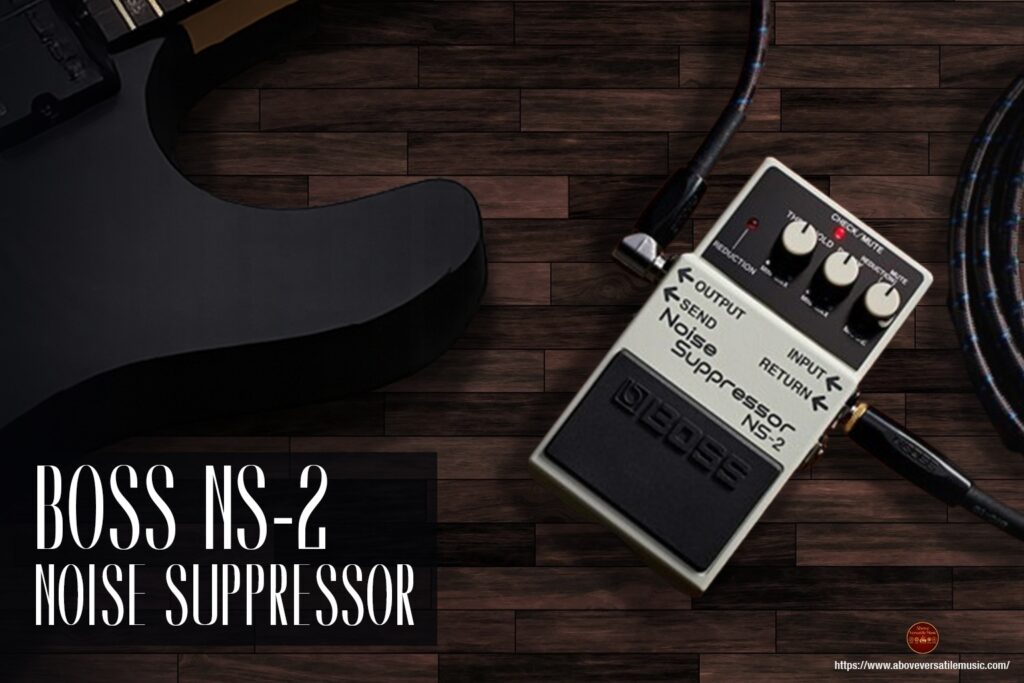
It doesn’t matter if it’s pickup hum or pedal noise; once you hear it, you can’t ignore it. Unwanted noise can ruin a perfect setup. A clean tone demands controland years. That’s where one piece of gear has stood the test of time, the Boss NS-2 Noise Suppressor, a go to solution trusted by players for decades.
Most players casually call this a Noise Gate, but it’s actually a noise suppressor, and that distinction is important. A basic Noise Gate simply cuts your signal when it drops below a certain level. The problem? It can feel harsh. Your notes get chopped off, and sustain disappears.
The NS-2 works smarter. It’s designed to recognize the difference between your actual playing and unwanted noise. So instead of killing your tone, it cleans it and keeps your attack sharp and lets your notes fade out naturally.
The Controls: Simple but Powerful
Threshold: It decides when the pedal starts removing noise. Think of this as your filter. The goal is balance, eliminating unwanted noise without affecting your quiet playing.
Decay: This determines how gradually the signal fades. This controls how natural everything feels. A slower sounds more natural, while a faster setting creates a tighter, more aggressive cutoff.
Set them correctly, and your tone stays alive, cleaner, tighter, and more controlled.
The Secret Weapon: The Send/Return Loop
Here’s where the NS-2 really separates itself from the basic noise gate.The real magic isn’t the footswitch. If you really want to use the NS-2 like a pro, you need to understand the send/return loop.
Most guitar players make the mistake of placing a noise suppressor after their noisy pedals. That works, but not perfectly. It often kills sustain or affects your entire signal, including reverbs and delays.
The Smarter Way Is To Use The Loop:
Why does that matter? Because your tone stays alive. You place your noisy pedals (like distortion or high gain) inside the NS-2 loop. What this does is powerful: the NS-2 listens to your clean guitar signal directly, but only applies noise reduction to the pedals inside the loop. So your gain gets cleaned up without touching the rest of your tone.
Think of it like this: Instead of muting everything, the NS-2 isolates the problem and fixes it at the source. Your distortion gets tighter and quieter, but your reverbs and delays don’t get cut off or choked. Everything feels more natural.
It’s like putting your noisy pedals in a controlled environment, where the NS-2 can manage them without interfering with the rest of your sound.
Here’s how it works:
- Your clean guitar signal goes into the NS-2
- Your noisy pedals sit inside the loop (Send → pedals → Return)
- The NS-2 monitors your clean signal but suppresses noise only from the loop
The result is precise noise reduction without sacrificing tone or dynamics.
The Right Way to Set Up the Boss NS-2
Setting up a noise suppressor might not feel as exciting as plugging into a new delay or fuzz pedal but it’s one of the most important things that instantly separates a basic setup from a polished, tight, and studio ready rig.
The Boss NS-2 stands out because it doesn’t just sit somewhere in your signal chain. It can actually control your chain, especially the noisy parts and control them more intelligently.
If your goal is a clean, controlled, and professional sound, the way you wire this pedal matters just as much as the pedal itself.
Let’s break it down.
Two Ways to Setup the NS-2:
There are two main ways people use the NS-2. One is simple (quick and easy) and works for most guitar players. The other is a more advanced setup often used by high gain guitar players who need tighter control of a pro level setup (for maximum control).
Let’s understand the simple standard one.
1. The Simple In line Setup
This is the most simple and straightforward in line setup. Just drop the NS-2 into your chain like a regular pedal in your chain.
Chain:
Guitar > Tuner > NS-2 (Input > Output) > Overdrives > Modulation > Amp
Best for:
- Single coil hum pickups (60 cycle noise)
- Light to moderate overdrive setups
- Players who want a quick, no complication solution
It works well, but it doesn’t fully unlock what the NS-2 can really do.
2. The X Method ( The 4 Cable Professional Setup)
This is the most effective way to use the Boss NS-2, it’s what professionals rely on for maximum noise control. This is where the NS-2 shows its real power. This method uses the pedal’s internal send/return loop to trap and eliminate noise specifically from your high gain pedals or your amp’s dirty noisy channels, without affecting your clean pedals tone or time based effects.
How to Wire It:
- Guitar > NS-2 (Input)
- NS-2 send > into your overdrive/distortion (noisy pedals) > Amp Input
- Amp FX loop send > NS-2 return
- NS-2 output > into your delay/reverb (time based effects) > Amp FX loop return.
Why This Works: The NS-2 uses your clean guitar tone/signal at the input as its reference, this is what it listens to in order to detect when you’re actually playing. This surgical approach silences hiss, hum, and feedback without cutting off your sustain or choking your notes. You get complete noise elimination with zero compromise to your tone or playing dynamics.
Mastering the NS-2 Settings:
The NS-2 only has three main controls, but don’t underestimate them. They’re incredibly sensitive and demand precise adjustment. Here’s how to dial them in for a natural, transparent sound.
1. The Mode Selector: Reduction vs Mute
- Reduction Mode: This is your standard operating mode where you’ll spend 99% of your time. It actively reduces noise whenever you stop playing, keeping your signal clean during pauses.
- Mute Mode: This turns the footswitch into a complete kill switch and your signal dies instantly. Perfect for silent guitar swaps between songs or tuning on stage without bleeding noise through the PA.
2. Threshold: Your Volume (The Gatekeeper)
- How to set it: Start with the threshold all the way down.Stop playing and listen to your noise floor. Now slowly turn the knob up until that hiss and hum vanish.
- Critical Warning: here’s the mistake everyone makes. Stop as soon as the noise disappears. If you go too high, the NS-2 will start killing your sustain and cutting off the natural decay of your notes. Less is more here.
3. Decay: How Fast the Gate Closes
- For Metal/Djent: Set this low (counterclockwise) for those aggressive staccato stops that feel like a punch to the gut, instant for tight,heavy rhythmic playing.
- For Blues/Rock: Set this higher (clockwise) so your held notes fade out naturally and musically into silence rather than getting chopped off abruptly. This preserves the organic feel of your playing.
The Golden Rule: Pedalboard Signal Chain
To keep your tone legendary and professional, you must be careful about what goes inside the suppressor and what stays outside.
| Pedal Type | Placement | Why? |
| Tuner / Wah | Before NS-2 | You want the cleanest guitar signal reaching the NS-2’s brain. |
| Overdrive / Fuzz | Inside NS-2 Loop | These are the “noise makers.” Trap them where they live. |
| Compressor | Before NS-2 Input | Compressors raise the noise floor; the NS-2 needs to kill that hiss. |
| Delay / Reverb | After NS-2 Output | If you put these inside the loop, your echoes and trails naturally instead of cutting them off. |
The Legendary Final Check: Pro Engineer Tone
Once you have it all wired up, now it’s time for the ultimate test.
- The setup: Engage your highest gain, loudest overdrive and set your amp to performance volume.
- The Silence: Step back and take your hands off the strings. You should hear absolute silence, no hiss, no hum.
- The Calibration: If you hear a pumping or breathing artifact as the gate closes, back off the threshold slightly.
If it’s dead quiet, you’ve mastered the chain. If the gate feels like it’s choking your notes, just nudge the threshold counter clockwise. Remember, the goal isn;t to kill your notes sustain, but to kill the hiss, hum noise. When you take your hands off the strings, the stage should be silent.
If you’re ready to take your playing to the next level, you can pick up the NS-2 at the link below. It’s the easiest way to clean up your rig and get that legendary noise free sound.
👇
Boss NS-2 Noise Suppressor Pedal
My Own Experience:
I’ve tried a lot of noise suppressors over the years from different brands, and while each one has something going for it,some were decent, some were overkill but the Boss NS-2 is the one I keep coming back to when I need a clean, reliable signal.
It handles a wide range of noise sources from single coil pickups to high gain signal chains, while preserving dynamics and sustain. It cleans things up while keeping the feel of my playing intact. That’s something a lot of gates struggle with.
It’s also built like a brick. You don’t have to baby it. It’s made for real world use. The hardware is exactly what you’d expect from Boss: rugged, reliable, and built for long term use.
Functionally, the reduction and mute modes add real flexibility. Mute mode, in particular, is extremely practical for love scenarios like silent tuning or switching instruments without signal bleed. And the fact it can power another pedal? Practical advantage is the DC output, which allows you to power additional pedals. On a dense pedalboard, that can simplify your power setup and reduce clutter.
A professional sound, whether on a stage or in a high end studio, isn’t built on a single pedal. It’s built on a clean foundation. The boss NS-2 is the silent partner ensuring your performance remains the centre of attention, not the background hiss or hum.
The checklist of your signal:
- Pickups
- Cables
- Power supply
- Amp
- Grounding
In my personal rig,I personally pair the NS-2 with Emg Pickups. If you’ve followed my work, you know I’m a firm believer in active electronics for high performance audio. Active electronics are designed for noise canceling from the ground up, providing massive output without the vintage style coil hiss or hum. It’s the ultimate combo for high gain distortion clarity.
Check out my breakdown of the EMG Pickups here: Why EMG Pickups Are More Versatile Than You Think
There are plenty of gates on the market, use what fits your budget. Take the time to audit your gear. When the noise is gone, the music can finally breathe.